
Science in the Midst of Theosophy
The Central Hindu College of Benares (1898-1916)
DOI:
https://doi.org/10.18732/hssa124Keywords:
Annie Besant, Central Hindu College, Benares, Science Education, Theosophy, Hindu RevivalismAbstract
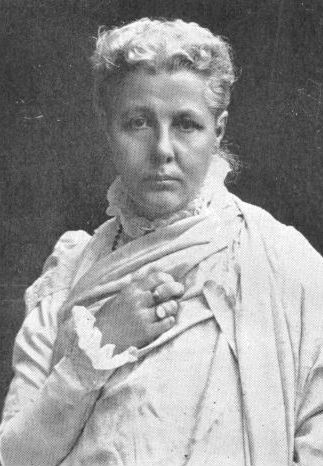
This paper explores the Central Hindu College (C.H.C.) of Benares as a notable example showcasing that modern science was not merely transplanted into colonial India as a Western import but was redefined and integrated within the Indian cultural and intellectual traditions. The study delves into the educational philosophy of the college's founder, Annie Besant, and particularly her approach to combining science and technical education with moral education embedded in the teachings of the Hindu religion to create an educational system that catered to the needs of Indian society under British rule. The paper highlights the intellectual exchanges at C.H.C., where traditional Hindu scientific knowledge, especially its mathematical and medical learning, was interwoven with modern scientific education, reflecting a broader trend of cultural nationalism and revivalism. A special focus is given to the early years of science education at C.H.C., particularly the achievements of its chemistry department, which thrived due to the theosophical underpinnings of the college. Besant's interest in occult chemistry—a subject that intrigued even contemporary scientists—is also examined, adding a layer of complexity to the understanding of how science was perceived at the college. Furthermore, the discourse of technical education, which recognizes its intrinsic relationship with industrial development, is also discussed. This discourse was reflected in the pages of the college magazine, illustrating the broader ambitions of C.H.C to contribute to the economic and industrial development of India by establishing a Technical Institute. This study thus addresses the significant gap in understanding concerning how modern science, often viewed as a Western import, was reinterpreted and integrated within the cultural and intellectual traditions of colonial societies like India. The study is particularly relevant as it contributes to a global understanding of how national institutions established in colonies mediated modern science. The findings hold significant implications for comparative studies on the institutionalization of modern science in other Western colonies across Asia, Africa, and South America. By situating the C.H.C. within the broader discourse of science, religion, and industrialization, this study provides a framework for exploring the science and technical institutions established in the colonies of European nations and the impact of modern science in diverse colonial contexts.
Downloads
Downloads
Published
How to Cite
Issue
Section
Categories
License
Copyright (c) 2026 Ritesh Gupta

This work is licensed under a Creative Commons Attribution-ShareAlike 4.0 International License.
Authors who publish with this journal agree to the following terms:Authors retain copyright and grant the journal right of first publication with the work simultaneously licensed under a Creative Commons Attribution-ShareAlike license that allows others to share the work with an acknowledgement of the work's authorship and initial publication in this journal.
Authors are able to enter into separate, additional contractual arrangements for the non-exclusive distribution of the journal's published version of the work (e.g., post it to an institutional repository or publish it in a book), with an acknowledgement of its initial publication in this journal.
Authors are permitted and encouraged to post their work online (e.g., in institutional repositories or on their website) prior to and during the submission process, as it can lead to productive exchanges, as well as earlier and greater citation of published work (See The Effect of Open Access).